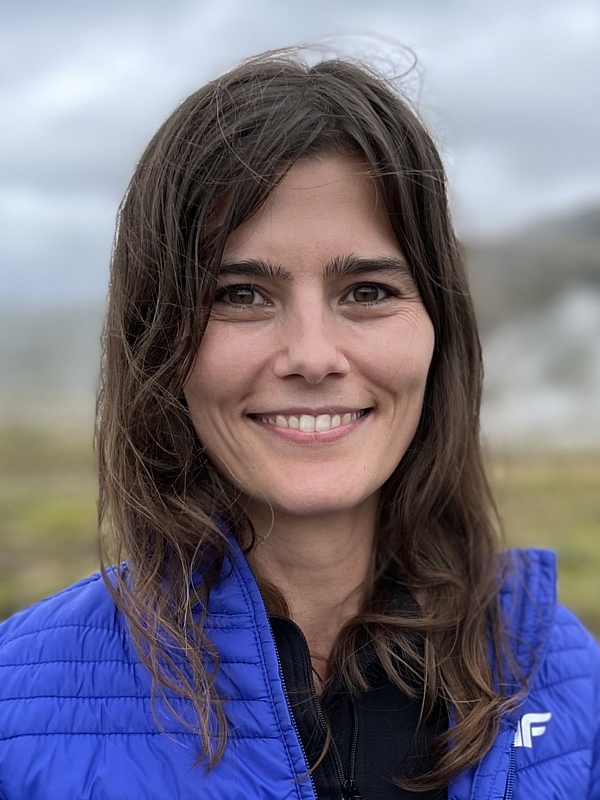
MAIN RESEARCH INTERESTS |
Focused on benthic ecology, with particular emphasis on biomineralization processes in marine invertebrates and the environmental and biological drivers influencing them. My research integrates ecological, biogeographic, phylogenetic, and biogeochemical approaches to examine ecosystem functioning and responses to environmental change. I have conducted research in both cold and tropical marine environments, with the majority of my work focused on the Baltic Sea, New Zealand, and the European Arctic. Sea-going research and scientific diving are integral components of my work and a passion I continue to develop.
|
| EDUCATION |
- 2025–present: Adjunct at the IO PAN
- 2024–2025: Oceanographer at the IO PAN
- 2021–2024: Adjunct at the Department of Oceanography and Geography, University of Gdańsk, Poland.
- 2020: PhD at the IO PAN, thesis title: Chemistry of carbonate skeletons of benthic invertebrates from the Baltic Sea.
- 2014–2021: Oceanographer at the IO PAN
- 2011: Master’s Degree in Marine Biology at the Institute of Oceanography, University of Gdańsk, Poland.
|
| RESEARCH PROJECTS |
- 2025–present: Researcher; A low-CO2 smart autonomous multiplatform system to monitor and forecast Calanus finmarchicus stock - a new sustainable climate-neutral blue fish feed (CliN-BluFeed); NCBiR. Responsibilities: data management, analysis and visualization, participation in scientific meetings and conferences.
- 2024–2025: Investigator; Carbonate skeletons as climatic-proxy archives. Assessment of climate change impact on the structure, mineral, and geochemical composition of calcifying benthic fauna in the Arctic region over the last several years (CARMA); NCN. Responsibilities: Laboratory work, geochemical analyses, and data analysis.
- 2021–2024 – Project leader; The geochemical and mineralogical variability of calcifying fauna along the gradient of calcium carbonate saturation state as a key to understand the impact of climate change on marine ecosystems (DEEPER); NCN.
- 2023–2026: Investigator; the Norwegian project Digitizing bryozoans: a largely undocumented phylum in Norway (NorDigBryo), part of The Norwegian Taxonomy Initiative (NTI). Responsibilities: Fieldwork.
- 2024: Investigator; Studies on the biodiversity of organisms inhabiting the bottom of harbor basins and the assessment of the impact of overhandled cargo on species biodiversity at the Port of Gdynia, along with the identification of potential mitigating measures.. Responsibilities: Taxonomic identification of benthic fauna, data analysis, and visualization in R.
- 2017–2021: Investigator; Revealing global pattern in bryozoan skeletal mineralogy and its implication for understanding impact of climate changes on marine invertebrates (PANIC); NCN. Responsibilities: Laboratory and field work, geochemical analyses, and data analysis.
- 2018–2022: Project leader; Mineralogy and chemical composition of external skeletons of benthic invertebrates from the Baltic Sea as an input to understanding the biomineralization process (LOGGER); NCN.
- 2014–2017: Investigator; The Changing Ocean of the Polar North (POLNOR); NCBiR, Polish-Norwegian grants. Responsibilities: Laboratory and field work, geochemical analyses, and data analysis.
|
| VISITED RESEARCH UNITS |
- 2022, 2023, total duration: five months – Internship at the Centre for Ecological and Evolutionary Synthesis, Natural History Museum at the University of Oslo, Evolution and Paleobiology Group, Oslo, Norway. Main goal: phylogeny of bryozoans and data analysis in R. Host: prof. Lee Hsiang Liow.
- 2018, 2023, total duration: three weeks – Visiting researcher at the University of Otago, Department of Marine Science in Dunedin and Marine Laboratory in Portobello, New Zealand. Main goal: participation in a research cruise in the Pacific Ocean, collection of bryozoan and seawater samples, biogeochemical analyses, taxonomy, scientific consultations. Host: prof. Abigail M. Smith.
- 2019, one week – Visiting researcher at the Steinhardt Museum of Natural History of Tel Aviv, Israel. Main goal: investigation of the bryozoan collections from the Mediterranean and the Red Seas, scientific consultations. Host: Dr Noga Sokolover.
- 2018, one week – Visiting researcher at the NIWA (National Institute of Water and Atmospheric Research), Wellington, New Zealand. Main goal: investigation of the bryozoan collection from New Zealand, taxonomy, scientific consultations. Host: Dr Dennis Gordon.
- 2018, two weeks – International Summer School on Bryozoa: Diversity and evolutionary trends in colonial animals. Federal State Budgetary Educational Institution of Higher Education Saint–Petersburg State University, Educational and Research station “Belomorskaya”, White Sea, Russia.
- 2013, 2014, 2018, total duration: eight weeks – Visiting researcher at the Natural History Museum in London, Imaging and Analysis Centre, UK. Main goal: mineralogical and geochemical analyses (X-ray diffraction, spectrometry, spectroscopy, SEM) of calcifying marine organisms, scientific consultations. Hosts: dr Jens Najorka and dr Stanislav Strekopytov.
|
 back to Laboratory of Biodiversity and Scientific Diving Research back to Laboratory of Biodiversity and Scientific Diving Research |